
When you look at your auto insurance policy, you will likely see two terms side by side: Collision and Comprehensive. While they are often bundled together as "full coverage," they actually protect you from very different types of "what-ifs."
At the Harmoning Agency, we believe you will understand what you are buying. Whether you are navigating a snowy highway or parked in your own driveway, here is the breakdown of how these coverages work for you.
What is Collision Insurance?
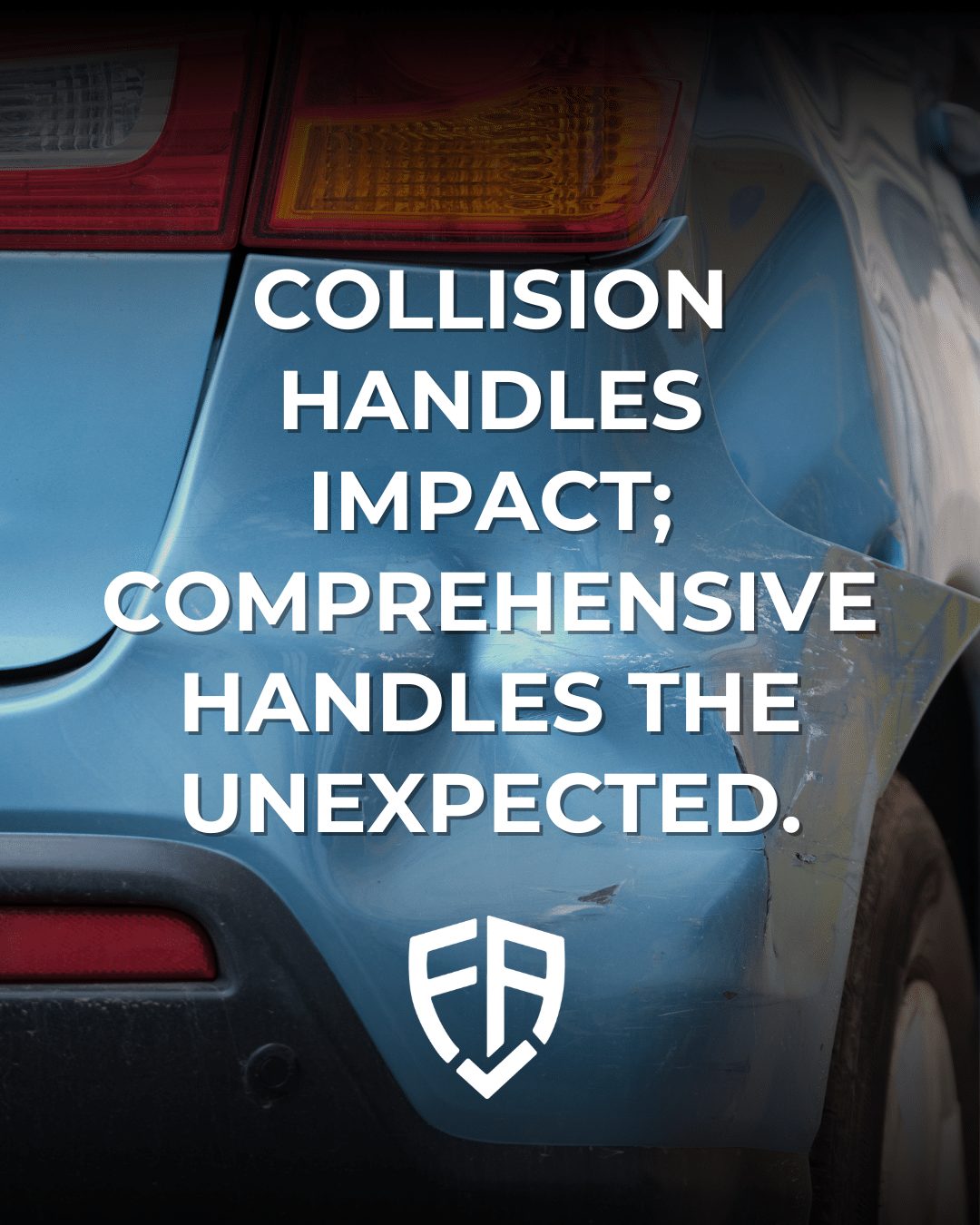
Think of Collision coverage as protection for accidents involving an impact. If your vehicle is in motion and hits something else, this is typically the coverage that steps in.
It generally covers:
- A crash with another vehicle.
- Hitting a stationary object like a fence or guardrail.
- A rollover accident.
A Little Known Fact: Parking lot "door dings" are a huge source of confusion. If you open your door and hit a parked car, or if you are backing out and clip a parked vehicle, it is filed as a Collision claim. Even though it feels minor, because your vehicle was the one in motion hitting another object, it falls under your Collision coverage and your Property Damage Liability.
What is Comprehensive Insurance?
Comprehensive coverage is often called "other than collision" because it handles damage caused by events that are largely out of your control. If Collision is for active impacts, Comprehensive is for passive events.
It generally covers:
- Theft or vandalism.
- Fire or explosions.
- Falling objects like a tree branch during a windstorm.
- Glass and windshield damage from stray rocks.
A Little Known Fact: If you hit a deer on a rural Minnesota road, you might think that is a Collision claim since the car was moving. However, animal strikes are almost always filed under Comprehensive. Animals are considered unpredictable acts of nature. Filing it under Comprehensive can often be better for your pocketbook because these deductibles are frequently lower than Collision deductibles.
Which One Do You Need?
If you have a loan or a lease on your vehicle, your lender will likely require both. However, if your car is paid off, you have the choice.
Here are a few things to consider:
- The Value Rule: If your annual premium for these coverages plus your deductible costs more than 10 percent of your car’s total value, it might be time to consider dropping them.
- The Deductible Factor: You can carry different deductibles for each. Many people choose a higher deductible for Collision to lower their premium and a lower deductible for Comprehensive since glass claims are so common.
Your Peace of Mind is Our Priority
Insurance is more than just a set of rules. It is a safety net for your daily life. Whether you are driving the family SUV or a farm truck, we want to make sure you have the right balance of protection without paying for things you do not need.
Ready to review your auto policy? Give us a call or stop by the office. We will help you look through your current limits and ensure you are ready for whatever the Minnesota roads throw your way next.